Making money with a faceless account: what the rules actually say
Videos promising easy money from a faceless account never quote the rules. Here they are, as TikTok and YouTube write them, along with what they change for a video made with AI.
By the ClipDivision team6 min read
The short answer
Yes, a faceless account can get paid, but under strict conditions, and nothing is guaranteed. On TikTok, the Creator Rewards Program asks for at least 10,000 followers, 100,000 views in the last 30 days and original videos at least one minute long[1]. On YouTube, revenue sharing starts at 1,000 subscribers, with 4,000 watch hours in 12 months or 10 million Shorts views in 90 days[2]. ClipDivision promises no income.
Key takeaways
- None of the pages we read requires showing your face: they ask for original content.
- TikTok: 10,000 followers, 100,000 views in 30 days, videos at least one minute long.
- YouTube does not pay for content mass-produced from a template, with or without AI.
- Disclosing that a video is AI-made limits neither its earnings on YouTube nor its distribution on TikTok.
- ClipDivision promises no income: it helps you post solid videos, often.
The honest answer
None of the rules read for this guide requires you to show your face. What TikTok and YouTube ask for is original content, a real audience and videos that follow their guidelines[1][2]. An account built on talking fruit, creatures or narrated stories can apply, just like a filmed one.
But being able to apply is not the same as getting in. The thresholds are high, TikTok reviews accounts and videos, and a program can change its terms. ClipDivision promises no income, and you should be wary of any tool that does. This guide tells you what is written, not what you will earn.
TikTok: the Creator Rewards Program requirements
TikTok's Creator Rewards Program pays for videos based on their qualified views. To join, you need to[1]:
- be based in a country where the program is available
- have a personal account in good standing (Business accounts are not eligible)
- be at least 18 years old (19 in South Korea)
- have at least 10,000 followers
- have at least 100,000 video views in the last 30 days
- post original content, in videos at least one minute long
A qualified view is a unique view from the For You feed that lasts more than 5 seconds, excluding paid or artificial views. A video starts counting once it reaches 1,000 qualified views[1].
What that means for an AI video
The program page does not mention AI as such[1]. It talks about originality: content “filmed, designed, and produced entirely by yourself”. It does not say AI is excluded, and it does not say AI is accepted: TikTok's review decides, video by video.
Ads, paid promotions, sponsored content and videos linked to a Series, TikTok's paid feature, are excluded as well[1].
The page also lists what does not count as original[1]:
- Duets and Stitches
- content that is copied or barely modified
- looping videos, photos on their own and text on its own
- copyrighted music that plays for more than one minute
In plain terms: a 10-second loop or an image slideshow will not be paid. A one-minute story with your characters, your script and a real ending fits the description. That does not mean TikTok accepts an AI video automatically: its review has the last word.
YouTube: the threshold, then the authenticity rule
On YouTube, ad revenue sharing opens at 1,000 subscribers, with 4,000 qualified watch hours in the last 12 months or 10 million qualified Shorts views in the last 90 days[2].
The threshold is not enough. Since July 15, 2025, YouTube has used the name “inauthentic content” for what it will not pay for: AI-generated content made from generic templates that gives the impression of mass production, image slideshows and templated storylines, or unrelated AI clips stitched together to surprise viewers[3]. The same page accepts using AI to bring to life a character and a story you invented[3].
On July 16, 2026, YouTube spelled out three types of content that cannot earn money: generic, repetitive or template-based content, content made to shock or upset, such as an animal in distress that someone comes to rescue, and AI personas talking about finance, law or health[4].
The dividing line is not AI, it is a run of interchangeable videos. A character and a story you invented: that is the example YouTube's page gives of what is accepted[3].
The AI label does not cut off earnings
Many creators hesitate to disclose their videos for fear of being penalized. The texts say the opposite. YouTube writes that disclosing AI content alone won't limit a video's audience or its eligibility to earn money[5]. TikTok writes that turning on the “AI-generated content” setting won't affect the distribution of a video that follows its guidelines[7].
Skipping the label, on the other hand, can get your video removed[7]. Our guide to TikTok's AI label covers the rule and the steps.
Other income, with no promises
Platform programs are only one path. Others do not depend on a follower threshold, and none of them is guaranteed:
- Brand deals. A brand pays you for a video. On TikTok, any video that promotes a brand, product or service must turn on the content disclosure setting, and TikTok states that this does not affect its distribution[6].
- Your own product or service. A book, a shop, a service: your account becomes your storefront, and the same disclosure rule applies[6].
- Recommending tools. You recommend a tool you use and earn a commission on the subscriptions you bring in. ClipDivision has its creator program.
Watch the trap: ads, paid promotions and sponsored content do not count in TikTok's Creator Rewards Program[1]. A partnership video is paid by the brand, not by the program.
What makes the difference
All these texts point the same way: a world of your own, a character people recognize, a story that moves forward. That is also what makes people follow.
In practice: pick one world (12 faceless account ideas to help you), keep the same characters from one video to the next, aim for one-minute stories if you have TikTok's program in mind, and post at a pace you can hold for months.
This is where ClipDivision helps: you type an idea in one sentence and get back an edited vertical video, with characters who keep their face and their voice. With Pro you get 12 min of video a month, that's 12 one-minute stories, and a video can run up to 3 min. To understand how TikTok decides which videos to show, read our guide to its recommendations.
Put it into practice
A ready-to-run idea to try what you just read. Tap it and it lands in the slate.
Episode 1: the day she inherits the family hotel, Lina finds out room 12 has been rented for twenty years under her mother's name.
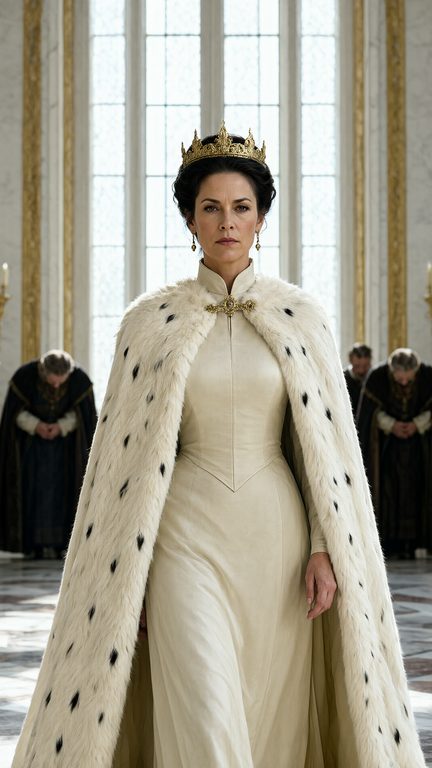
Micro-drama series
FAQ
Can you monetize AI videos on TikTok?
The Creator Rewards Program page does not mention AI. It asks for original content, videos at least one minute long, 10,000 followers and 100,000 views in 30 days. TikTok's review decides, account by account and video by video.
Can you monetize AI videos on YouTube?
Yes, if they are original. YouTube accepts AI used to bring to life a character and a story you invented, and will not pay for content mass-produced from a template. The threshold is the same for everyone: 1,000 subscribers and 4,000 watch hours, or 10 million Shorts views.
Do you have to show your face to get paid?
None of the pages read for this guide requires it. They ask for original content and a real audience.
How much does a faceless account make?
Nobody can tell you honestly. On TikTok, rewards depend on qualified views and on an amount per 1,000 qualified views, plus a share tied to the quality of the video. No figure applies to everyone, and ClipDivision promises no income.
Sources
Pages read on November 15, 2026. Platform rules change: check the official page before you post.
- [1]TikTok, Creator Rewards Program
- [2]YouTube, YouTube Partner Program overview & eligibility
- [3]YouTube, YouTube channel monetization policies
- [4]TechCrunch, YouTube clarifies policies around AI slop and upsetting videos (page dated July 20, 2026)
- [5]YouTube, Disclosing use of GenAI content
- [6]TikTok, Promoting a brand, product, or service
- [7]TikTok, About AI-generated content