How to write a hook that holds viewers from the first second
On TikTok, everything is decided before the thumb moves. Here are seven hooks that work for character videos, with a written example for each, and how to slip them into your idea.
By the ClipDivision team6 min read
The short answer
A good TikTok hook shows or says what is at stake in the very first second: an action already underway, a line nobody can ignore, a detail that is off. TikTok advises its advertisers to put the hook in the first six seconds and the proposition in the first three[1]. For a character video, write the hook at the start of your idea so the video opens on it.
Key takeaways
- The hook is the first image and the first line, not an introduction.
- The time people spend watching a video weighs heavily in what TikTok recommends[2].
- Seven patterns are enough: action underway, the impossible line, the day counter, the accusation, the question with a stake, the detail that is off and the countdown.
- Write the hook at the start of your idea, word for word.
- Test two hooks on the same story before you judge the story.
What the rules of the game say
TikTok does not publish a magic recipe, but three of its official pages say the same thing, each in its own way.
In its creative best practices for ads, TikTok recommends putting the hook in the first six seconds to increase watch time, and introducing what the video offers in the first three[1]. The advice is aimed at advertisers, but it holds for any video: the promise comes right away.
Its page on recommendations explains that the For You feed takes into account the videos people watch in full or skip, and that interactions, including the time spent watching a video, generally weigh more than the rest[2].
Finally, in its rewards program, a view only counts as a qualified view after more than five seconds of watching[3]. In other words, for that program, a video left before five seconds was never watched.
Keep the orders of magnitude in mind: the first second decides whether people stay, the first five decide whether the view counts.
Seven hooks that work, each with an example
Here are seven patterns. Each one is written for a character video, the way you could type it into your idea.
- Action already underway: we arrive in the middle of the scene. “The bride is racing down the stairs, her veil caught in the door.”
- The impossible line: a sentence nobody can leave hanging. “I buried that chest myself. It was not empty.”
- The day counter: a number that announces a story in progress. “Day 47 on the mountain. Still no Wi-Fi.”
- The accusation: one character accuses another, eye to eye. “You ate MY salmon. On my birthday.”
- The question with a stake: a question whose answer costs something. “Do you open the letter, or do I read it in front of everyone?”
- The detail that is off: a normal image, except for one thing. “In the sunflower field, one flower is staring at the camera.”
- The countdown: a deadline stated right away. “In thirty seconds the bell rings and it will be too late.”
These seven patterns have one thing in common: they put a question in the viewer's head before the viewer has decided to stay.
A hook is seen as much as it is heard
The first image arrives before the first line. It has to carry the hook on its own: a character in motion, an object in the foreground, a face reacting.
Three simple habits: open on a close shot instead of an empty set, put the main character on screen from the first image and let the captions show the first line in full. TikTok also advises advertisers to use captions or text overlays to give context[1].
With ClipDivision, captions are burned in by default and the first line appears as it is spoken.
How to write it into your idea
When you type an idea into ClipDivision, the script is built from your sentence. If it starts with the context, the video is likely to start with the context. So put the hook first, then the story.
- Before: “A story about a bride who discovers her fiancé's secret.”
- After: “The video opens on the bride saying: I read your messages. Then we find out what her fiancé was hiding.”
Write the opening line word for word and say that the video starts with it. Our guide to writing a good video idea gives the full formula.
Write your hook in four steps
- 1
Find what is at stake
What can your character lose or win in this video? That is what the first second has to show.
- 2
Pick one of the seven patterns
Action underway, impossible line, day counter, accusation, question, off detail or countdown.
- 3
Write the first line in under ten words
Short, concrete, spoken by a character. No greeting, no context.
- 4
Put it at the start of your idea
Type the hook first, then the rest of the story in the same sentence.
Hooks for a series
In a series, the hook of an episode answers the ending of the one before. If episode 2 stopped on a key being held out, episode 3 opens on the hand taking it, not on a recap.
Keep a fixed marker too: the episode number on screen and the same characters. Someone who arrives mid-series understands there is more, and a regular recognizes the series in one second. The full method is in our guide to making an AI TikTok series.
Test two hooks on the same story
When a video does not take off, the story usually gets the blame. It is rarely the story. Before you drop it, make the same video again with another hook and post both a few days apart.
Then compare the stats of the two videos, average watch time in particular. Keep the pattern that holds people best and reuse it. To understand what TikTok does with that signal, read how TikTok chooses the videos it shows.
With ClipDivision's Studio mode, you can change only the first shot of a video and keep everything else.
With ClipDivision
In ClipDivision's ready-made formats, the hook is part of the recipe: the first shot already carries the challenge of the day in a creature vlog, the detail that is off in a scary story, the shocking line in a fruit drama. You give the idea, the first shot follows.
You can also write everything yourself: one sentence is enough, hook first. The first 15-second video is free, enough to try a hook without paying anything, then plans start at $9.99 a month. To practice, start from the ideas on the horror stories page or the faceless TikTok account page.
Put it into practice
A ready-to-run idea to try what you just read. Tap it and it lands in the slate.
The video opens on a single flower staring at the camera in a sunflower field, then all the others turn toward the lens one by one.
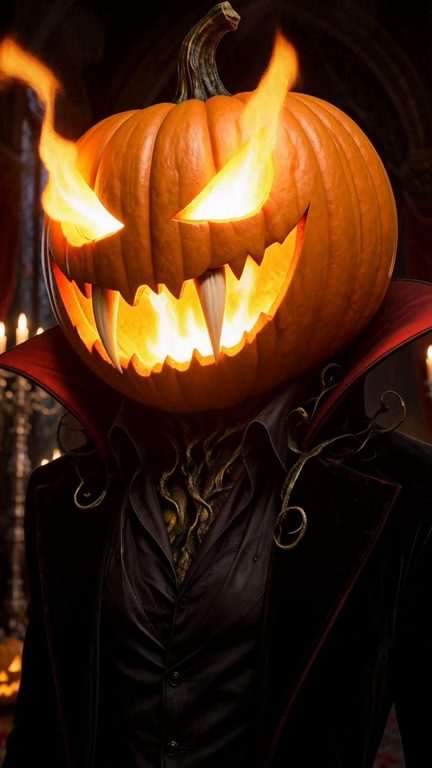
Scary story
FAQ
How long should a hook be?
One to two seconds for the image and the first line. TikTok advises advertisers to put the hook in the first six seconds, but the earlier it comes, the better.
Should I start with an intro or a title?
No. Start with the action or the line that makes people curious. The series name and the episode number can sit small on screen without taking the hook's place.
Is a shocking hook enough?
No. If the rest does not keep the hook's promise, people leave and do not come back. The hook announces the story, it does not replace it.
Do the same hooks work on Reels and Shorts?
The principle is the same everywhere: what is at stake has to be clear right away. You can post the same vertical video on all three platforms.
Sources
Pages read on November 15, 2026. Platform rules change: check the official page before you post.
- [1]TikTok, Creative best practices for performance ads
- [2]TikTok, How TikTok recommends content
- [3]TikTok, Creator Rewards Program